Doctor-led hair & scalp medicine · Andheri West, Mumbai
Hair Fall? Hair Thinning? Save the Hair You Have.
Find out what is causing your hair loss with a doctor-led scalp assessment, then explore non-surgical treatment options for hair preservation and hair quality.
Results vary. Treatment suitability requires medical assessment.

Start with your concern
What brings you here?
Hair loss has many possible causes — genetics, hormones, illness, medicines, nutrition, stress and scalp conditions. Choose the concern that sounds most like yours to learn more.


Featured treatments
Options to discuss with your doctor
These treatments work in different ways and have different levels of evidence. They are not equally effective, and not every option suits every patient — your doctor will recommend what fits your diagnosis.

Established for specific diagnoses
Clinician-prescribed oral or topical medicines, chosen after diagnosis and monitored for side effects.
Developing evidence · results vary
A concentrate of platelets prepared from your own blood and injected into the scalp.
Developing evidence · results vary
A preparation from your own blood, processed to concentrate platelet-derived growth factors.
Emerging · limited evidence
A platelet-rich fibrin preparation from your own blood, made without anticoagulant.
Developing evidence · results vary
Non-invasive red or near-infrared light, usually used over several months alongside other care.
Developing evidence · results vary
Controlled micro-injury to the scalp, mainly studied as an add-on to medical treatment.
Evidence labels are a simplified guide. How we rate evidence
Diagnosis before treatment
Understand your hair before choosing a treatment
Two people with similar-looking hair loss can need very different care. Your assessment may include:
- A detailed medical, family and medication history
- Scalp examination and trichoscopy (magnified scalp imaging)
- Assessment of hair density, shaft thickness and miniaturisation
- Blood investigations, only when clinically indicated
- A clear explanation of your options, their limits and costs
Our science
How hair grows — and why it thins
Good treatment decisions start with biology. These illustrations explain the basics; your doctor will relate them to your own scalp findings.
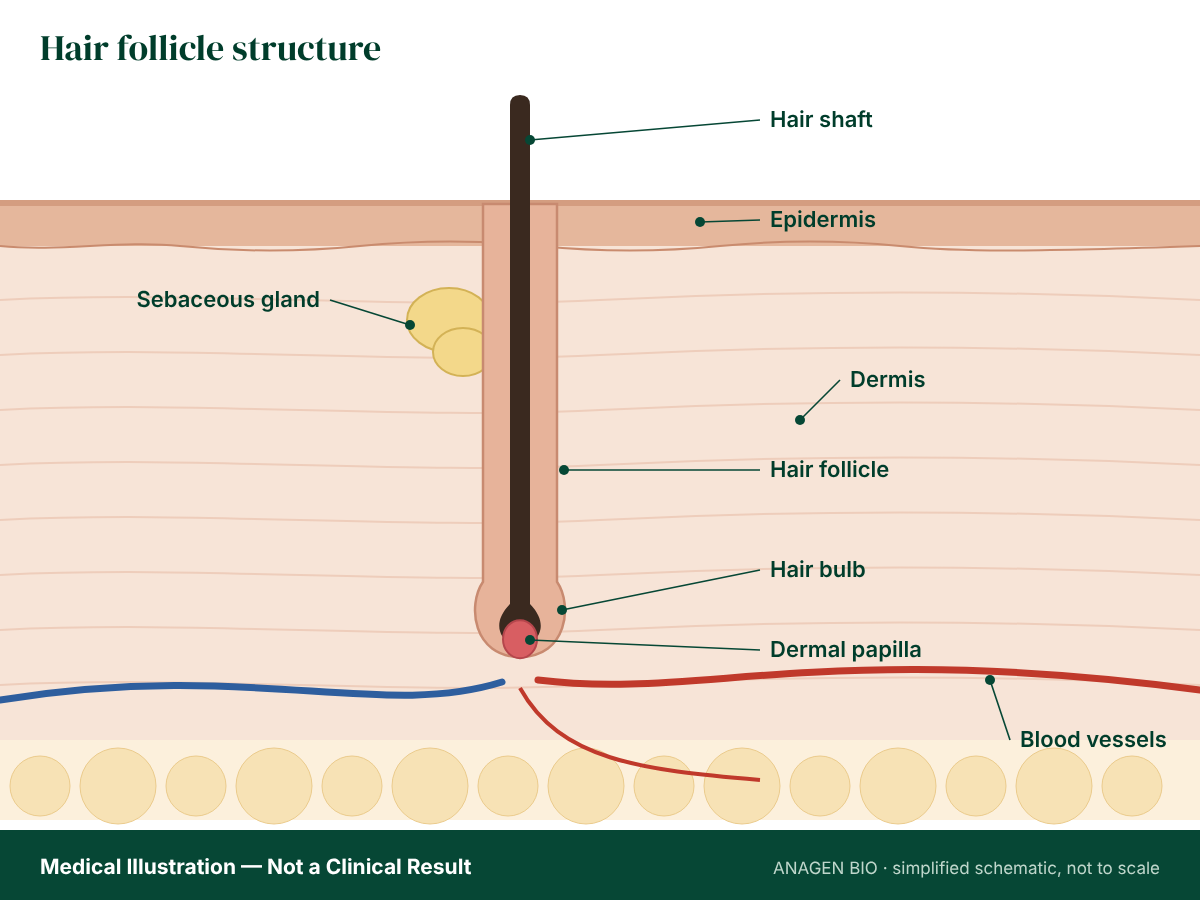
The hair follicle
Each hair grows from a follicle in the skin. The dermal papilla at its base helps regulate growth.
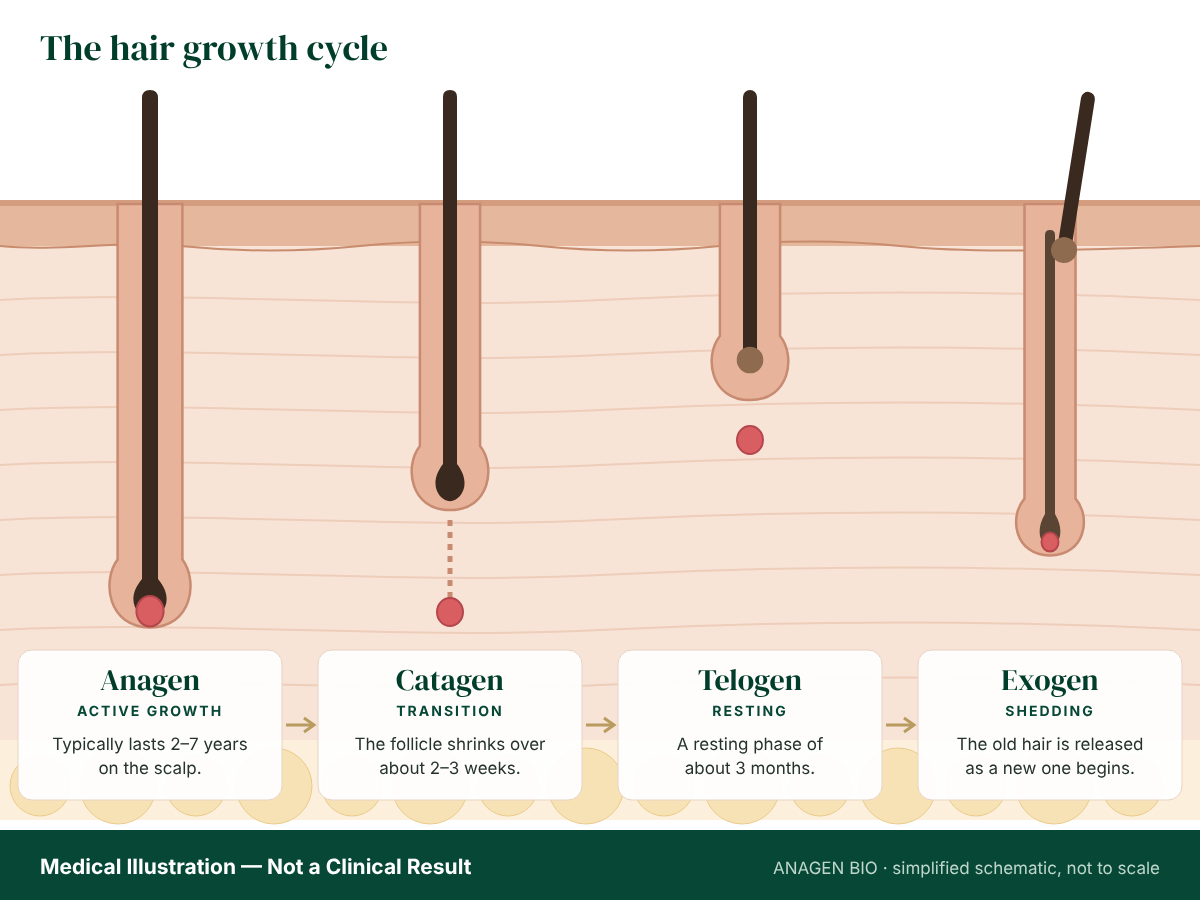
The growth cycle
Follicles cycle through growth, transition, rest and shedding. Losing some hair every day is normal.
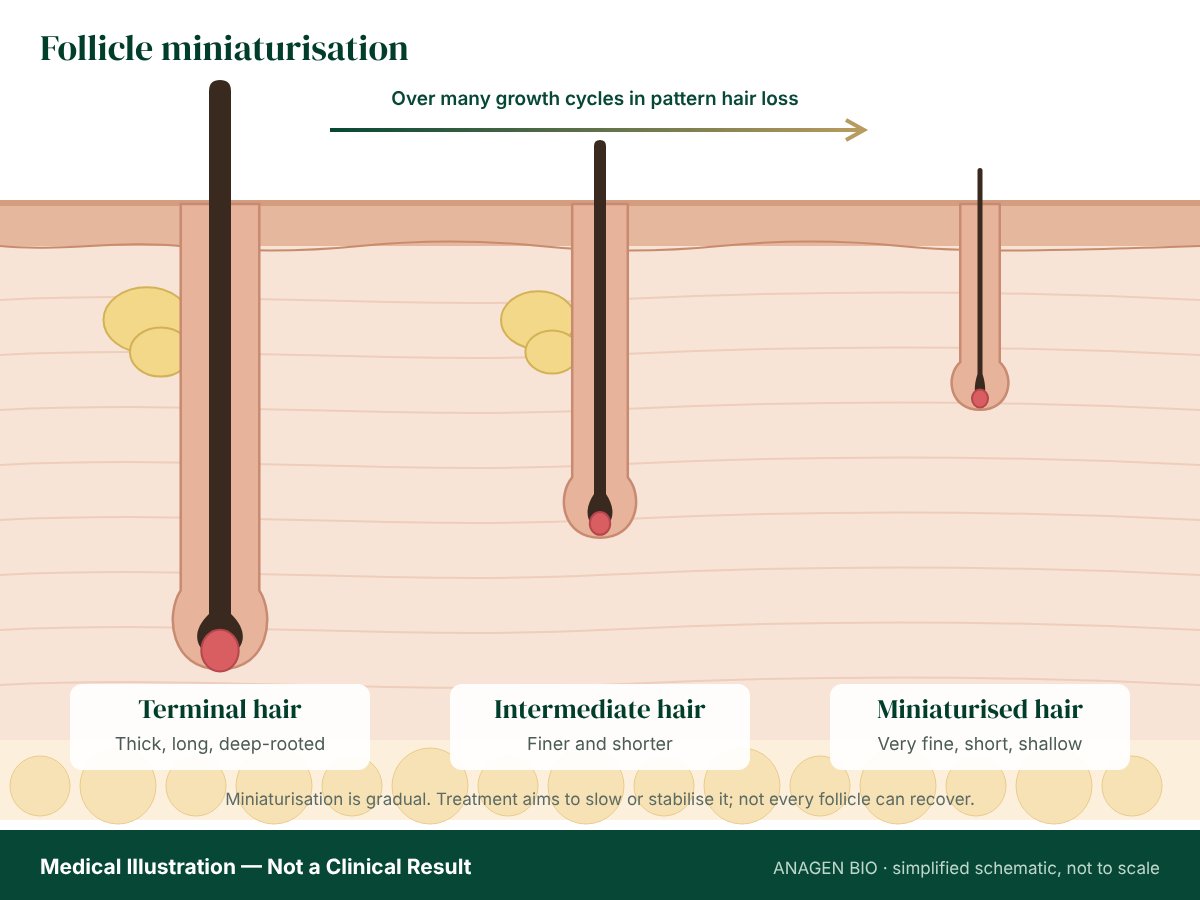
Miniaturisation
In pattern hair loss, affected follicles gradually produce finer, shorter hairs. Not every follicle can recover.
Supported by stronger clinical evidence for particular diagnosed conditions — for example, certain prescription medicines for pattern hair loss.
Some clinical studies show benefit, but results vary between patients and protocols, and long-term data is limited.
Early research. Benefits and long-term safety are not yet well established; offered only after a careful discussion.
Genuine results
Real patients. Unretouched photographs.
We publish only consented, unedited clinical photographs, with the treatment and timeframe stated. Individual results vary with diagnosis, treatment and response.


Meet your doctor
Dr. Vivek Nigam
MBBS · Founder & Director, ANAGEN Clinics
Dr. Vivek Nigam has spent over 25 years treating hair loss. At ANAGEN BIO, he leads a diagnosis-first approach: understand the cause, explain the evidence honestly, and build a treatment plan around what is realistic for each patient.
He is supported by ANAGEN’s clinical team for assessments, procedures and follow-up care.
Part of ANAGEN
Surgery or non-surgical care?
Both have a place. Which is right depends on your diagnosis, how advanced the hair loss is, and your goals. Many patients start with medical care; some later benefit from both.
Non-surgical care
May help manage some causes of shedding and thinning and support existing hair, depending on the diagnosis.
Hair transplant surgery
May suit selected patients with established hair loss and an adequate donor area. Offered by ANAGEN Hair Transplant.
Questions
Frequently asked questions
Straight answers to the questions patients ask most often. For anything specific to your hair, a consultation is the best next step.
Can all types of hair loss be treated without surgery?
No. Some causes of hair loss — such as certain shedding episodes, scalp conditions or deficiencies — may improve once the cause is identified and treated. Pattern hair loss can often be slowed or stabilised with medical care. Where follicles have been lost over many years, non-surgical treatment may not restore density, and your doctor may discuss surgical options with you.
How is hair thinning diagnosed?
Usually with a medical history, a scalp and hair examination and trichoscopy (magnified imaging of the scalp). Blood tests or other investigations are suggested only when they are clinically relevant.
What is the difference between PRP, GFC and iPRF?
All three are prepared from a small sample of your own blood, but they are processed differently. PRP concentrates platelets in plasma. GFC is processed to concentrate the growth factors released by platelets. iPRF is prepared without anticoagulant and forms a soft fibrin gel after injection. Their evidence differs — PRP has been studied the most of the three — and your doctor will explain which, if any, is suitable.
Are exosomes proven to regrow hair?
No. Exosome-based hair treatments are investigational. Human studies are limited, products vary widely in source and quality, and long-term safety is not established. If discussed, they should be considered only after a detailed conversation about the uncertainty and risks.
How long before results can be assessed?
Hair grows slowly, so changes are usually reviewed after about three to six months, with a fuller assessment often at six to twelve months. Results vary from person to person, and some people do not respond.
Are there risks or side effects?
Yes. Scalp procedures can cause pain, redness, swelling, bruising or headache, and rarely infection. Medicines have their own possible side effects. Your doctor will explain the risks, who should avoid each treatment, and the alternatives before you decide.
Will submitting an enquiry confirm my appointment?
No. Submitting the form sends us an enquiry. Our team will contact you to arrange a suitable date and time, and your appointment is confirmed only when we confirm it with you.
Book a consultation
Book a doctor-led hair assessment
Share a few details and our team will call you to arrange your assessment. It takes under a minute.
- Prefer to chat? WhatsApp us
- Call +91 92222 22407
- ANAGEN BIO, A6, SVP Nagar, MHADA, Andheri West, Mumbai 400053
Get directions
Enquiry received
Thank you for contacting ANAGEN BIO. Our team will review your details and contact you to arrange your hair assessment.
Continue on WhatsApp Call our team Return to homepage